Business Process Improvement Strategies
<p><strong> </strong>Process improvement projects are often initiated when a business needs to re-engineer its operations to stay competitive. As business analysts, we frequently get engaged in p

Process improvement projects are often initiated when a business needs to re-engineer its operations to stay competitive. As business analysts, we frequently get engaged in process investigation and improvement opportunities. In January 2024, I was tasked with investigating a problem area to enhance service quality for clients. This article will discuss one of the techniques I used after conducting a scenario analysis.
Firstly, I needed to understand the customer journey and identify pain points to figure out areas that needed improvement. To assist with this task, I analysed the process at the Actor level.
Process improvement tasks should begin with a problem investigation study to ensure the right solution is applied to the underlying issue. Business analysts must recognise that businesses operate within three levels of business process hierarchy. Understanding business hierarchy provides valuable insights for improvement work. The hierarchical view of business includes the Enterprise level, Response Event level, and Actor Task level.
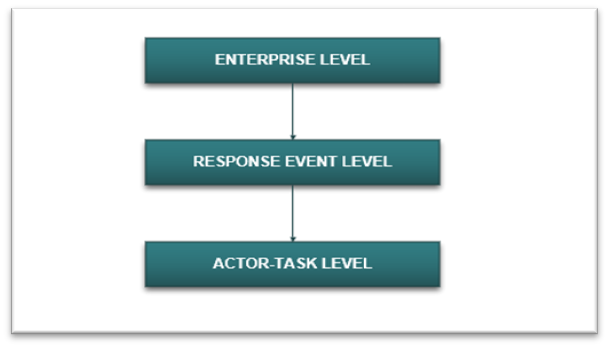
Figure 1 Business Process Hierarchy
When conducting process improvement, adopting a Lean mindset is essential. This involves enhancing quality, reducing costs, minimising waste, and providing better service to the customer. Using a systems thinking approach offers a holistic view of the business by examining the end-to-end processes. Sometimes, a Business Analyst may need to challenge existing business rules that could be causing the problem. These rules might be outdated and require a comprehensive review.
At the Actor level, the processes need to be analysed in detail, considering every scenario to identify bottlenecks. In the task I mentioned earlier, I used the “Change of Sequence Pattern” to streamline an elongated IVR call, reducing it by 52 seconds. This adjustment allowed certain customers to reach a valuable Vector Directory Number (VDN) much faster than they could before the improvement. Simply reordering the menu (Change of Task Sequence) resulted in a shorter path to the required VDN. Additionally, removing bottlenecks at various points in the process saved another 34 seconds of customer time on the call.
These two strategies are among the six business improvement strategies described by Debra Paul in the Business Analysis, fourth ed which are shown in the table below. These strategies can be used individually or in combination. When opportunities for automation arise, they should be embraced. In some cases, the entire process may need to be completely re-engineered to create a new, more efficient process.
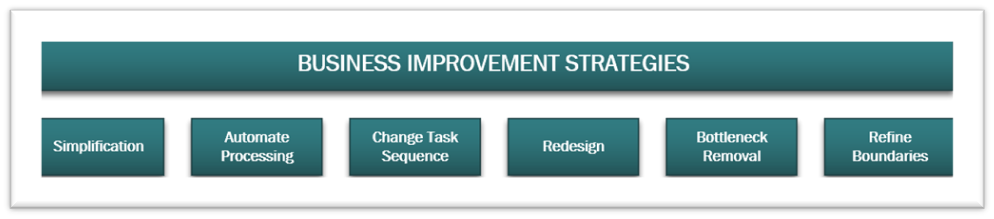
Figure 2 Business process improvement strategies.
Simplification
Simplification involves streamlining processes by removing or combining tasks. Any detail that does not contribute to the success of the process should be eliminated, reducing overall costs, time spent, and unnecessary hand-offs.
Automation
Automation enhances speed and reduces human involvement by adopting software to manage repetitive tasks as commonly seen in HR and Finance operations where human approval is typically required. By programming these tasks, activities such as self-check-ins for Airbnb can be automated to run seamlessly. Automation also ensures zero downtime and minimal changeover procedures, allowing bespoke or off-the-shelf software to perform specific functions efficiently. Activities such as registration process, reminders, renewals can be automated to approve, send out correspondence without the aid of an admin.
Change Task Sequence
Changing the task sequence can optimise performance, increase productivity, reduce costs, and synchronise tasks, improving the process from its “As is” to a more efficient to “To be” state. For example, reordering an IVR menu can help customers reach their desired option quicker without listening to lengthy menu options.
Redesign
Re-designing a process can improve efficiency when workarounds have increased average handling time and costs. A redesign introduces a smoother flow and corrects the issues that led to the workarounds.
Bottleneck Removal
Removing bottlenecks can enhance a process by eliminating delays. For instance, reducing the number of authorisation levels in a financial process can expedite the approval of customer refunds.
Refine Boundaries
Refining boundaries involves changing the order of tasks or processes to improve efficiency. Adopting technology to perform functions is a good example. Other examples include using AI for customer verification or allowing customers to complete a booking system themselves, freeing up agents’ time for more complex tasks.
In closing, the next time you are faced with a business process improvement task, remember to determine at what level the investigation needed. Put on your lean thinking cap, think end-to-end, and consider one or more of the business process improvement strategies listed above to provide options for improvement for your client.